
Why Am I Getting Website Visitors but No Enquiries?
Find out whether the problem is your traffic, your service pages, a broken form or what happens after an enquiry.

When the visitor count is rising but your inbox stays quiet, it is tempting to assume the website needs a redesign. Yet some of those visitors may be reading an old article, checking your opening hours or looking for a service somewhere you do not work. Before spending more to bring people in, it helps to understand who is arriving and what happens when a potential customer tries to contact you.
Start with the journey that matters: arriving on a service page, deciding whether you are suitable, then making an enquiry. A healthy-looking visitor total can hide a problem at any of those stages.
Check that an enquiry can actually reach you
Send a test enquiry from your phone, using an email address outside your business. Check the confirmation on screen and the message in your inbox. Reply to it and make sure your reply goes to the person who submitted it, not a website notification address.
The telephone and WhatsApp links are worth including in that test, because an old number or a message arriving in spam can look like a marketing problem when the immediate issue is delivery. If anything fails, a note of the device, page and exact step will give your supplier much more to investigate than a report that the form is broken.
Do not treat a button click as proof of an enquiry. Someone can click a telephone link without making a call, or open a form without sending it. Your records should distinguish interest from a conversation that actually happened.
Look at where those visitors are landing
Your home page may be clear while the page people actually arrive on is not. Check the pages receiving visits from search, social posts and any adverts separately. A person looking for one particular service should not have to search through your whole business to find it.
Ask three questions about each important landing page:
- Does it describe the service the visitor expected?
- Does it explain who you help and where you work?
- Is the next step suitable for someone arriving here for the first time?
For an illustrative example, a visitor looking for ongoing support may leave a page devoted entirely to buying a new website. More traffic to that page would not fix the mismatch. A specific explanation of support, what it includes and how to ask about it would be more useful.
Give people enough information to decide
Because you know your service so well, it is easy to leave out details that a first-time customer needs. Describing the business as professional and reliable does little to explain what is included, whether you handle their kind of job or how they can get a price.
Explain what the customer gets, what you need from them and what happens after they contact you. Show relevant work with a short explanation, not just attractive pictures. If a price depends on the job, describe the main things that affect it. You do not have to publish a price for every possible situation to help someone judge whether you are a sensible option.
Read the page as someone who has never spoken to you. Can they tell whether you take small jobs, whether you work with businesses like theirs and whether an initial conversation commits them to anything? Those details often matter more than another paragraph about your passion.
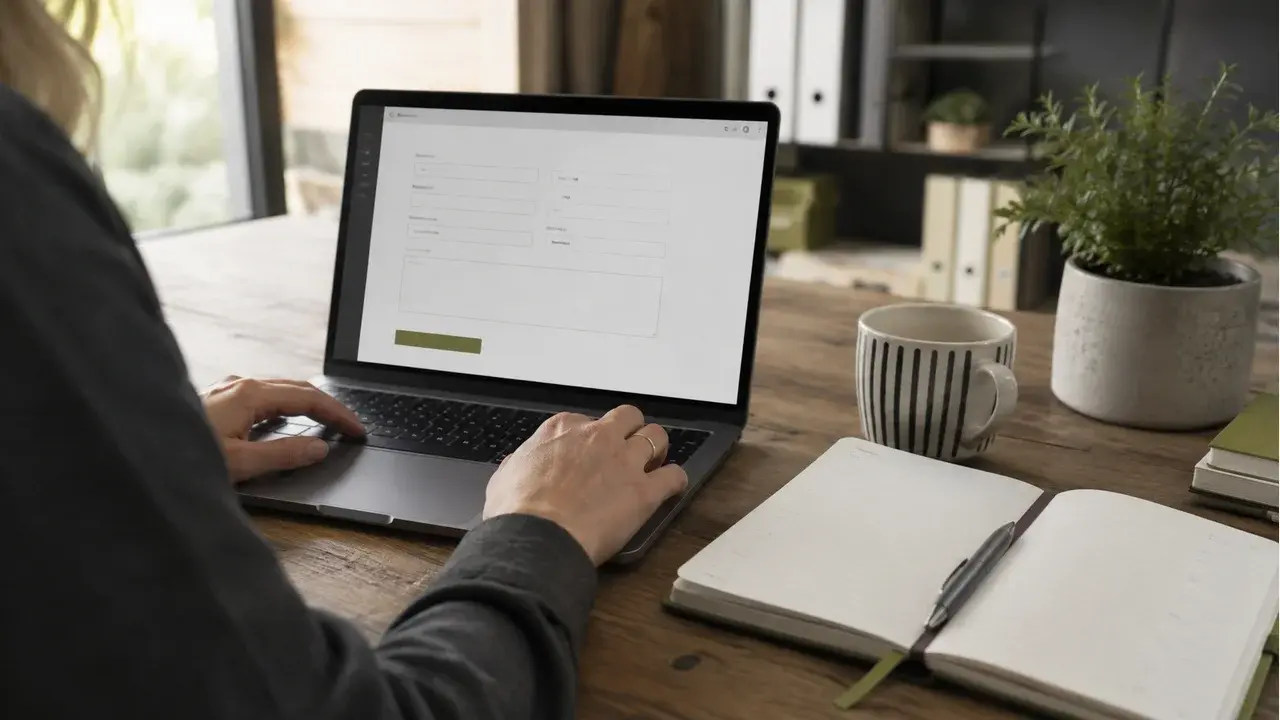
Make the next step easier without removing useful questions
At this stage, someone is deciding whether to speak to you, not supplying everything needed to complete the job. The form only needs enough information for you to understand the request and give a useful first reply.
Name, a way to reply and a short description may be enough for an initial enquiry. Other businesses genuinely need a location, date or service choice. Make those decisions around what you use, rather than copying a long form from a competitor.
People should be able to tell which questions they can leave blank without having to attempt a submission first. Where you need something less obvious, a brief explanation beside the field can prevent confusion, while a confirmation after submission lets them know what happened. The W3C guidance on form instructions explains how labels and help text support this.
Someone who would rather explain the job over the phone should still be able to find your number. Equally, a customer browsing after hours may want to leave a message without waiting until you reopen. Offering both routes gives people a way to get in touch that fits their situation.
Separate website problems from follow-up problems
The enquiries that already reach you can reveal where the next difficulty lies. A customer may have provided enough detail for an initial answer but received another long questionnaire, or waited so long for a reply that they contacted someone else. Those are follow-up issues that changes to the website alone will not resolve.
Keep a simple record of when each enquiry arrived, what it concerned and what happened next. Include enquiries that were unsuitable. If the site brings the wrong jobs, the page may need clearer boundaries. If suitable enquiries arrive but do not become customers, availability, price, follow-up or the offer itself may need attention.
For a small business with only a few enquiries, percentages can swing dramatically. Review actual conversations alongside the numbers instead of declaring success or failure after one quiet week.
Choose one change you can evaluate
Once any broken contact routes are working again, you can concentrate on one improvement whose effect you have a reasonable chance of understanding. That might be a clearer service explanation, a more relevant work example or a shorter form. Recording when it went live gives you a useful reference when reviewing later enquiries, alongside changes in advertising, season and workload.
Avoid redesigning the whole site simply because the visitor count feels disappointing. A focused improvement to a key page may be a better first investment. You can see examples of business websites or send me your website and the problem you are seeing if you want help deciding where to start.